
3 hr
La Candelaria Historic District Walking Experience
Explore Bogotá's cultural heart on foot with a knowledgeable local through historic streets and markets
Reserve
Hand-picked by our editors — only the best 5 experiences from 47 reviewed
Verified partners for every tour, free cancellation where available, and instant confirmation on every booking.
3 hr
Explore Bogotá's cultural heart on foot with a knowledgeable local through historic streets and markets
Reserve
2 hr 30 min
Explore Bogotá's urban art scene through vibrant murals that tell Colombia's story in spray paint
Reserve
2 hr 30 min
Explore Colombia's cultural heart with expert local guides through colorful streets, plazas, and hidden gems
ReservePrices from verified partners. Availability updates in real time at checkout. Free cancellation policies apply where shown.
The landmarks, rooms, and views travelers on this tour remember — all visible on a single visit.
The legendary site where the city was founded by Spanish explorers in 1538. It remains a vibrant social hub for students and street performers today.
The main square of the city surrounded by the Palace of Justice and the Primate Cathedral. This location is essential for understanding Colombia's complex political history.
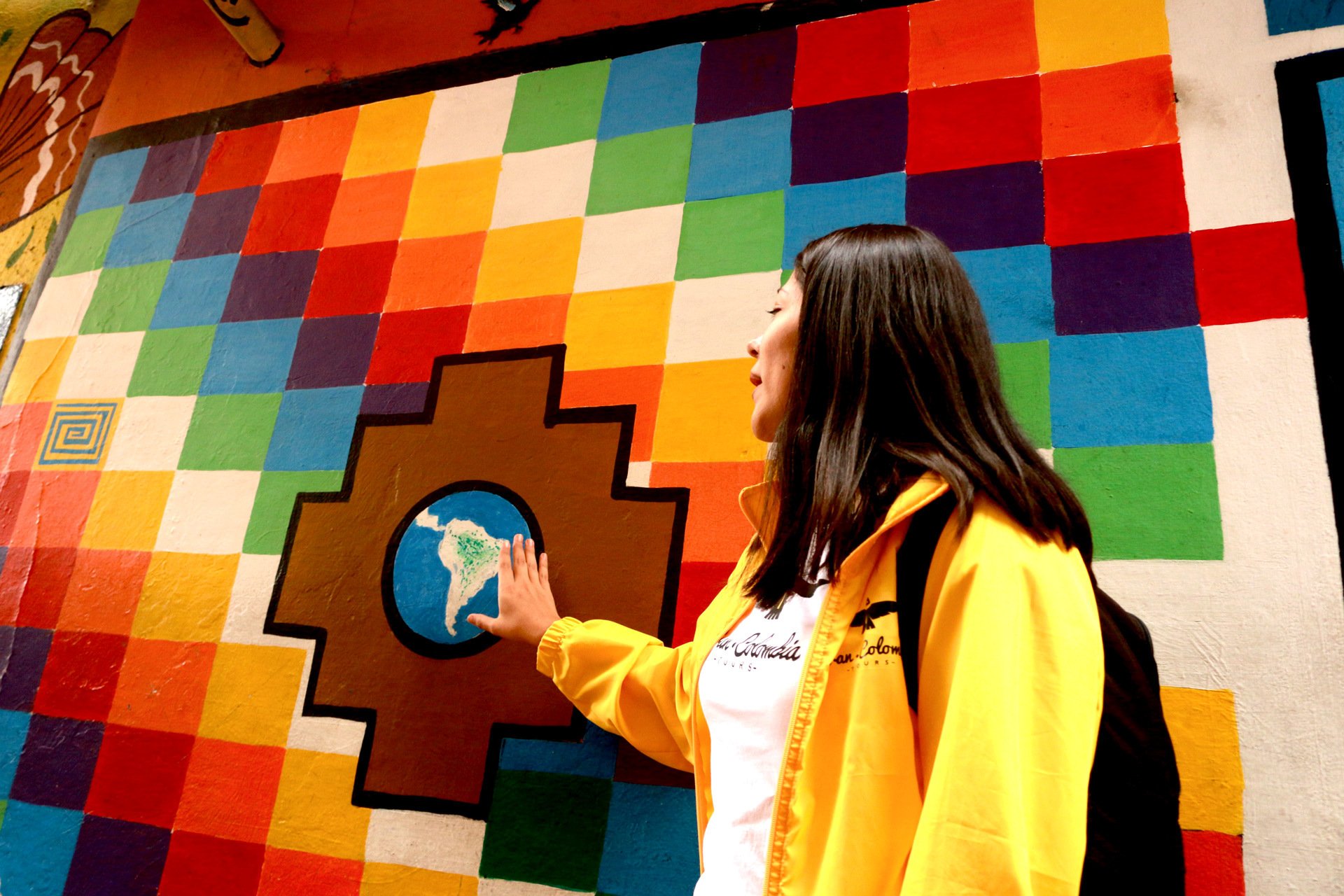
A narrow, colorful street famous for its dense display of local street art and graffiti. This area showcases the modern creative side of the neighborhood.
A traditional market where visitors can experience native Colombian fruits and juices. It provides a authentic glimpse into local gastronomic traditions.
An outdoor space dedicated to the famous artist Fernando Botero, known for his unique sculptural style. It is a central landmark for cultural exploration in the district.
They complement each other; travelers seeking broad cultural context favor the la candelaria free walking tour, while those preferring deep dives into niche history or street art choose paid thematic excursions.
| Feature | Top pick La Candelaria Free Tour | Paid Themed Tours |
|---|---|---|
Structure |
Open group format | |
Small groups guaranteed |
Group Size | Large, social groups |
Thematic Focus |
Broad city history | Niche subjects like graffiti or coffee |
Flexibility |
High, no booking required | Fixed schedules, booking required |
Expected Tip/Fee |
0 USD (tips expected) | 15–30 USD per person |
Guided Expertise |
Local storytelling | Specialized subject professionals |
| See tickets → |
Verdict: If you want a casual, social introduction to Bogotá landmarks, the la candelaria free walking tour tours provide excellent value, whereas paid tours are superior for specialized la candelaria free walking tour tickets holders seeking in-depth knowledge.
Choose your ticket, select your date, and reserve in under two minutes. Secure checkout handled by our verified partner.
Instant confirmation by email, with a mobile voucher you can save offline. No printing, no queuing at a collection desk.
Arrive at the entrance, show your voucher on your phone, and walk in. Most tickets include priority or skip-the-line access.
Practical details for your visit straight from our verified partners — hours, access, rules, and how to get there.
Plazoleta Chorro de Quevedo, Bogotá, Colombia
Look for the guide with the official logo or sign
Use TransMilenio to Las Aguas or Museo del Oro station.
Request drop-off near Chorro de Quevedo.
Wear comfortable walking shoes for the cobblestone streets of La Candelaria. Dress in layers to accommodate Bogotá's shifting weather conditions.
Keep personal belongings secure and within sight at all times. Avoid carrying large backpacks or excessive valuables during the la candelaria free walking tour.
Photography is encouraged throughout the historic center. Please be respectful when taking photos of locals or private property during your la candelaria free walking tour.
Many parts of La Candelaria feature uneven colonial-era cobblestones which may present challenges for strollers or mobility devices. Verify specific route accessibility with your guide before starting.
Mobile phones are useful for navigation and photography but should be kept in a secure pocket. Avoid using them while walking on busy thoroughfares.
The la candelaria free walking tour is suitable for families and provides an engaging history of the neighborhood for all ages. Children should remain supervised due to urban traffic in the city center.
The tour often includes tastings of local fruits or coffee. Feel free to carry a reusable water bottle, though food and drink options are plentiful nearby.
Some operators may allow well-behaved, leashed pets on the tour. Always confirm the policy with your guide prior to arrival.
The la candelaria free walking tour operates on a tip-based model. While the entrance fee is 0 USD, gratuities are customary and appreciated for the guide.
Plazoleta Chorro de Quevedo, Bogotá, Colombia
Look for the guide with the official logo or sign
Get directionsBest time to go, insider tips, nearby landmarks, and the cancellation fine print — flip through to skim what matters to you.
How crowds, weather, and events shift across the year.
Mild weather perfect for long walking tours of the historic center.
Drier months offer clearer skies for outdoor city exploration.
Occasional rain showers; ideal for museum-heavy walking routes.
Cooler temperatures; popular time for local festival events.
Small details that turn a good visit into a great one.
Arrive during the 10:00–14:00 window to ensure you catch the group.
Always keep your bag in front of you in crowded squares.
Bring small denominations of pesos for tips and local snacks.
Guides are local experts; ask about the best local restaurants.
Bogotá's high altitude can be dehydrating, so drink plenty of water.
Prepare for four seasons in one day with a light waterproof layer.
Non-bookable sights within a short walk — free to visit, easy to pair.
World-class collection of pre-Hispanic gold artifacts.
Extensive collection of Fernando Botero's art.
Historic cathedral on the main city square.
The national mint house with colonial history.
Flexible, no hidden fees.
Reservations for the la candelaria free walking tour can generally be cancelled free of charge if your plans change. Please check your specific confirmation for details regarding the 0 USD entrance fee policy.
Hand-picked options within walking distance — pick a district for vibe, or a specific hotel for convenience.
Historic colonial building near the main cathedral.
Popular social hostel in the heart of the district.
Numerous local guesthouses and boutique stays.
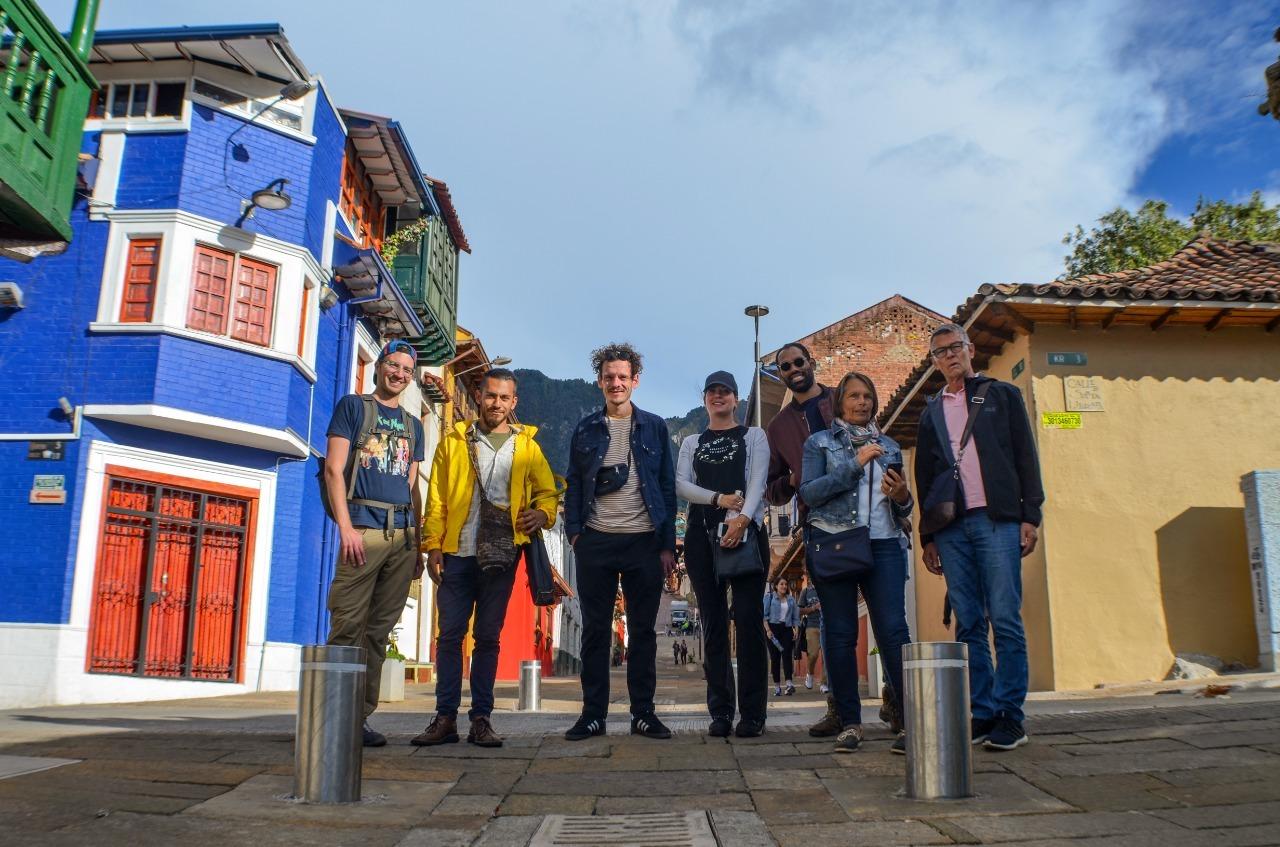
Plazoleta Chorro de Quevedo, where Gonzalo Jiménez de Quesada is said to have founded Bogotá in 1538, sits at the geographical and symbolic heart of La Candelaria. The cobbled square, no larger than a tennis court, anchors a neighborhood whose colonial grid has survived four centuries of earthquakes, civil wars, and the cement expansion of modern Bogotá. Today, street performers occupy the same stone steps where indigenous Muisca traded salt and emeralds before the Spanish arrival. Free walking tours through the historic district depart daily from this plaza, guiding visitors along the same routes that once connected viceregal administration buildings, Jesuit schools, and merchant houses. The district preserves more than 200 structures from the Spanish colonial period, including the Casa del Florero—where a broken vase sparked Colombia's independence movement in 1810—and the Teatro Colón, a neoclassical opera house completed in 1895. Guides navigate narrow streets named for trades that once lined them: Calle del Embudo (Funnel Street), where silversmiths hammered jewelry; Carrera Séptima, the commercial spine that connected the plaza to outlying haciendas. La Candelaria's architecture records every layer of Colombian history. Balconies painted in ochre, cobalt, and terracotta overhang doorways carved with family crests. The Palacio de San Carlos, now the Foreign Ministry, still bears bullet holes from an 1828 assassination attempt on Simón Bolívar. Around Plazoleta del Rosario, republican-era mansions converted into universities and cultural centers share walls with modernist murals commissioned during the 1960s cultural revival. The neighborhood's 32-block historic core, declared a national monument in 1963, functions as a living archive—not a museum district, but a working neighborhood where residents shop at corner tiendas and students fill cafés converted from colonial courtyards. Visitors joining a guided walk through the colonial quarter encounter this layered history on foot. Each corner reveals another stratum: pre-Columbian gold in the Museo del Oro's underground vaults, Spanish baroque in the Iglesia de San Francisco's gilded altarpiece, street art covering crumbling walls along Calle del Embudo. The district's vertical topography—streets climb from 2,600 meters at Plaza de Bolívar to 2,750 meters near Cerro Monserrate—provides views across red-tile rooftops toward the Andean peaks that ring the Sabana de Bogotá.
"Each corner reveals another stratum: pre-Columbian gold, Spanish baroque, street art covering crumbling walls"
A step-by-step walkthrough of the visit — what you'll see, how long each stage takes, and the details that matter.
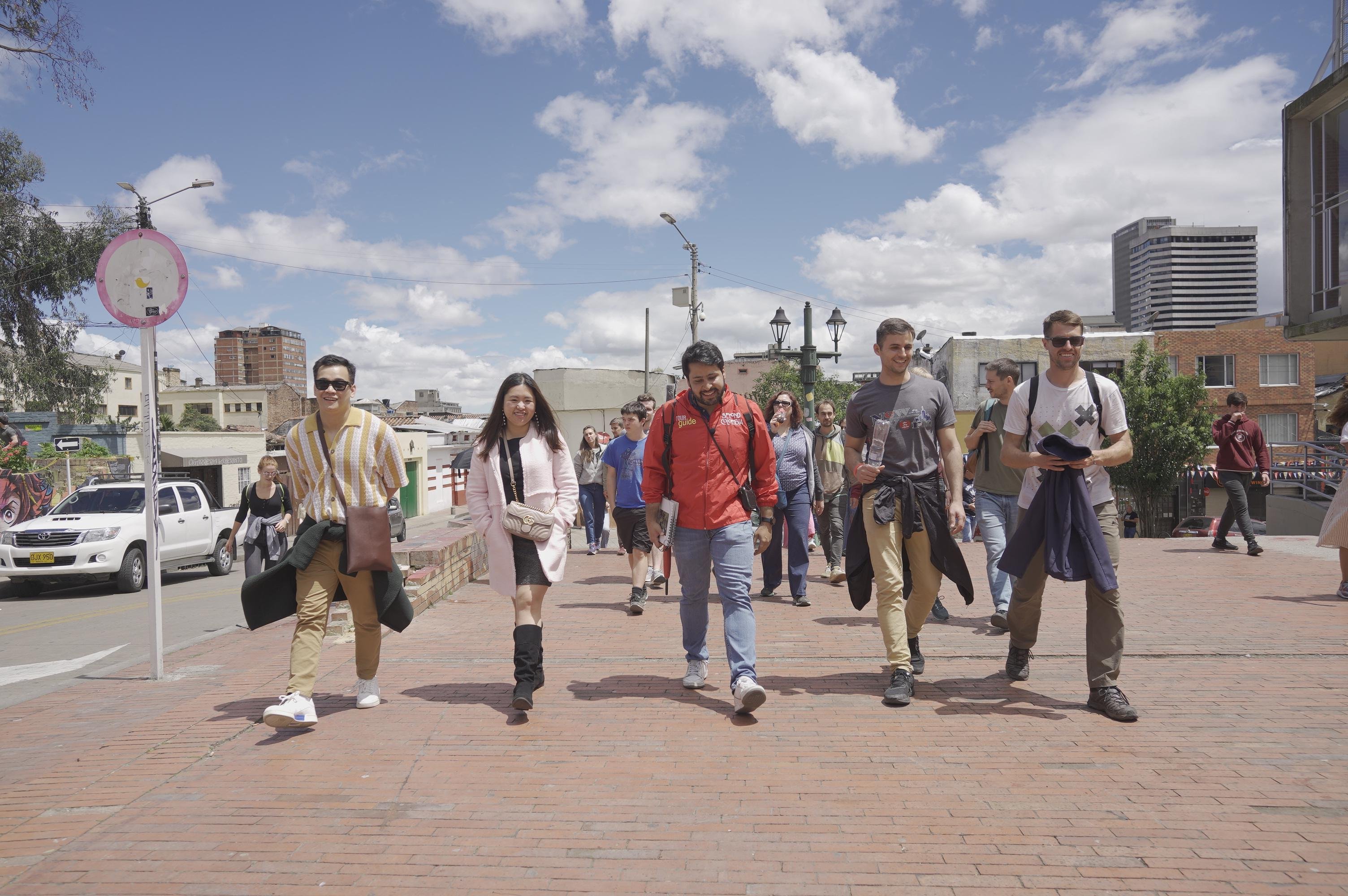
You arrive at Plazoleta Chorro de Quevedo between ten and two, when daily tours gather beneath the whitewashed chapel. Your guide—a Bogotá native who studied history at Universidad de los Andes—hands you a laminated map and begins with the Muisca legend of Bachué, the mother goddess who emerged from the nearby lake. You walk east along Calle 12C, pausing at colonial doorways where stone lintels display Spanish coats of arms carved in 1620. The route descends toward Plaza de Bolívar, passing the Casa del Florero's mustard-yellow façade. Inside, your guide recounts the 1810 vase incident in three minutes, then leads you across the plaza's expanse—14,000 square meters of grey concrete where pigeons scatter and presidential guards stand at attention outside the Palacio de Nariño. You climb back into the residential grid, stopping at a corner tienda for agua de panela while your guide explains how gentrification is displacing long-term residents. The final stretch threads through Calle del Embudo, where graffiti murals—stenciled faces of indigenous leaders, abstract geometric patterns in neon—cover every available surface. You pause at a mirador overlooking terracotta rooftops, then return to Chorro de Quevedo. The walk covers two kilometers and 150 meters of elevation. You tip your guide in cash—20,000 pesos is standard—and he recommends three nearby restaurants before the group disperses.
The entrance fee is 0 USD, though tips are customary for the guide.
The tours operate daily from 10:00–17:00.
Accessibility can be limited due to historic cobblestones; contact the operator to check the specific route.
Yes, you are encouraged to take photos of the landmarks visited.
Bring comfortable shoes, sun protection, and a water bottle.
Yes, the tour is family-friendly.
The meeting point is at Plazoleta Chorro de Quevedo.
The tour typically lasts approximately 3 hours.
The best arrival window is 10:00–14:00.